
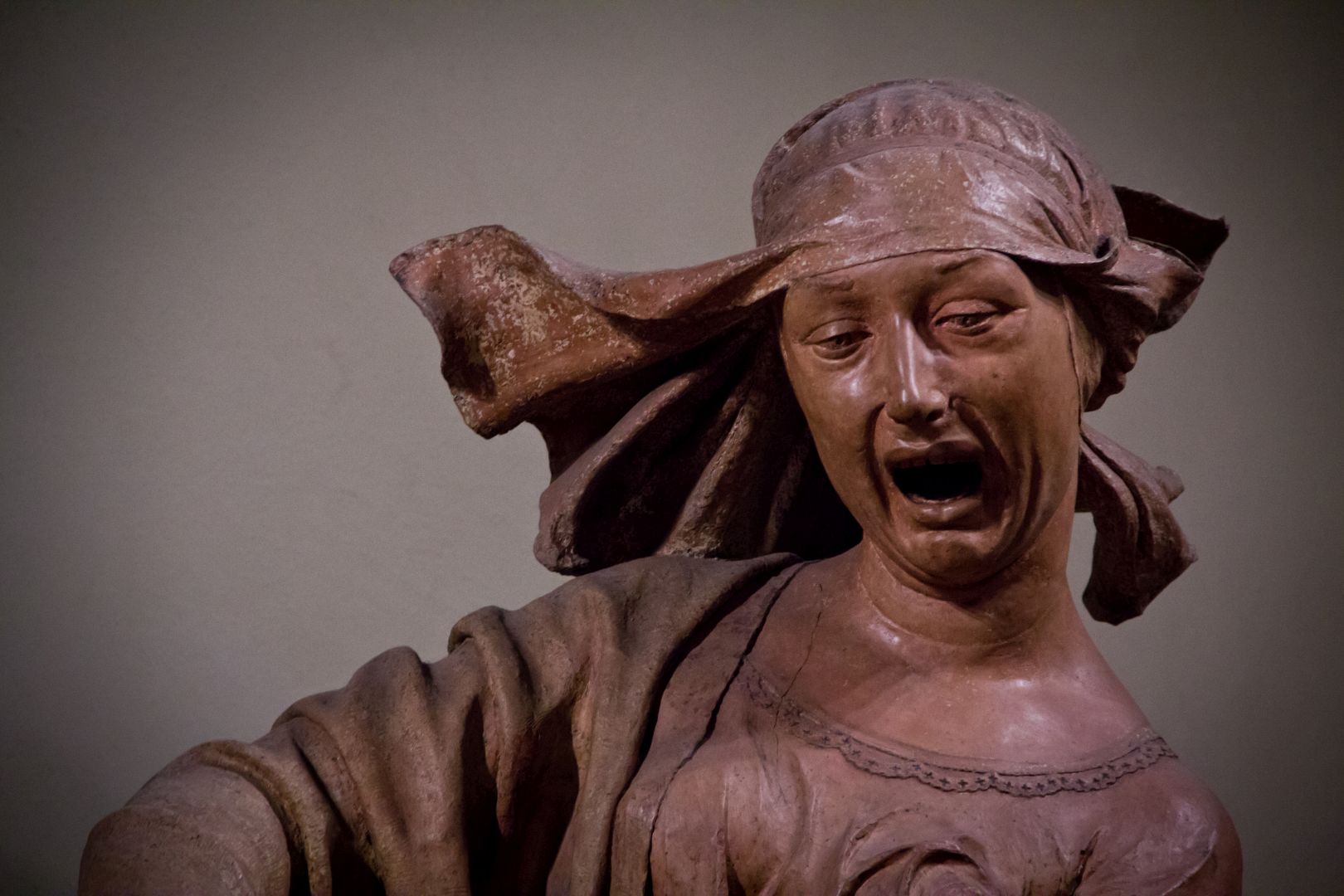
Compianto sul Cristo morto – Particolare 1
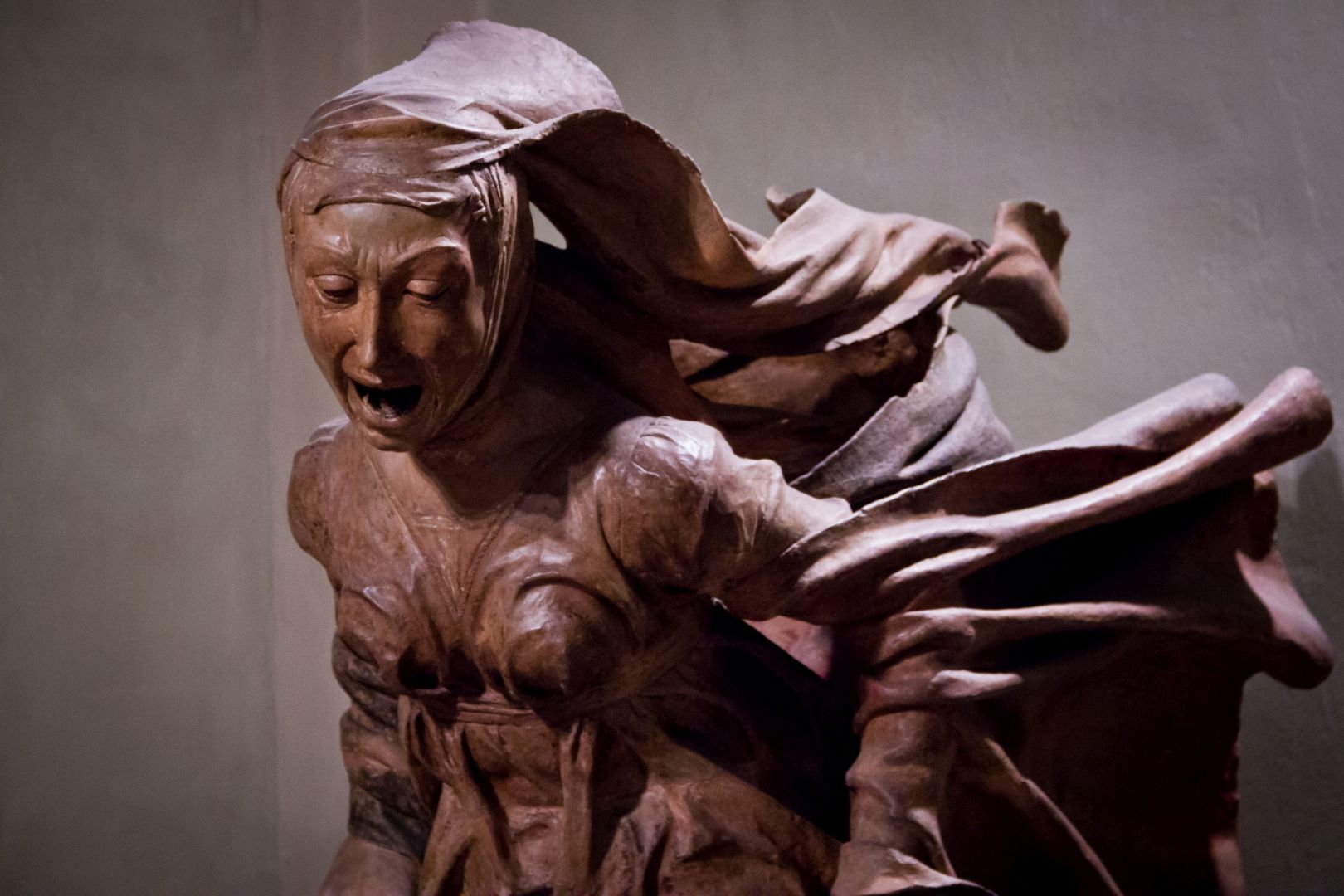
Compianto sul Cristo morto – Particolare 2
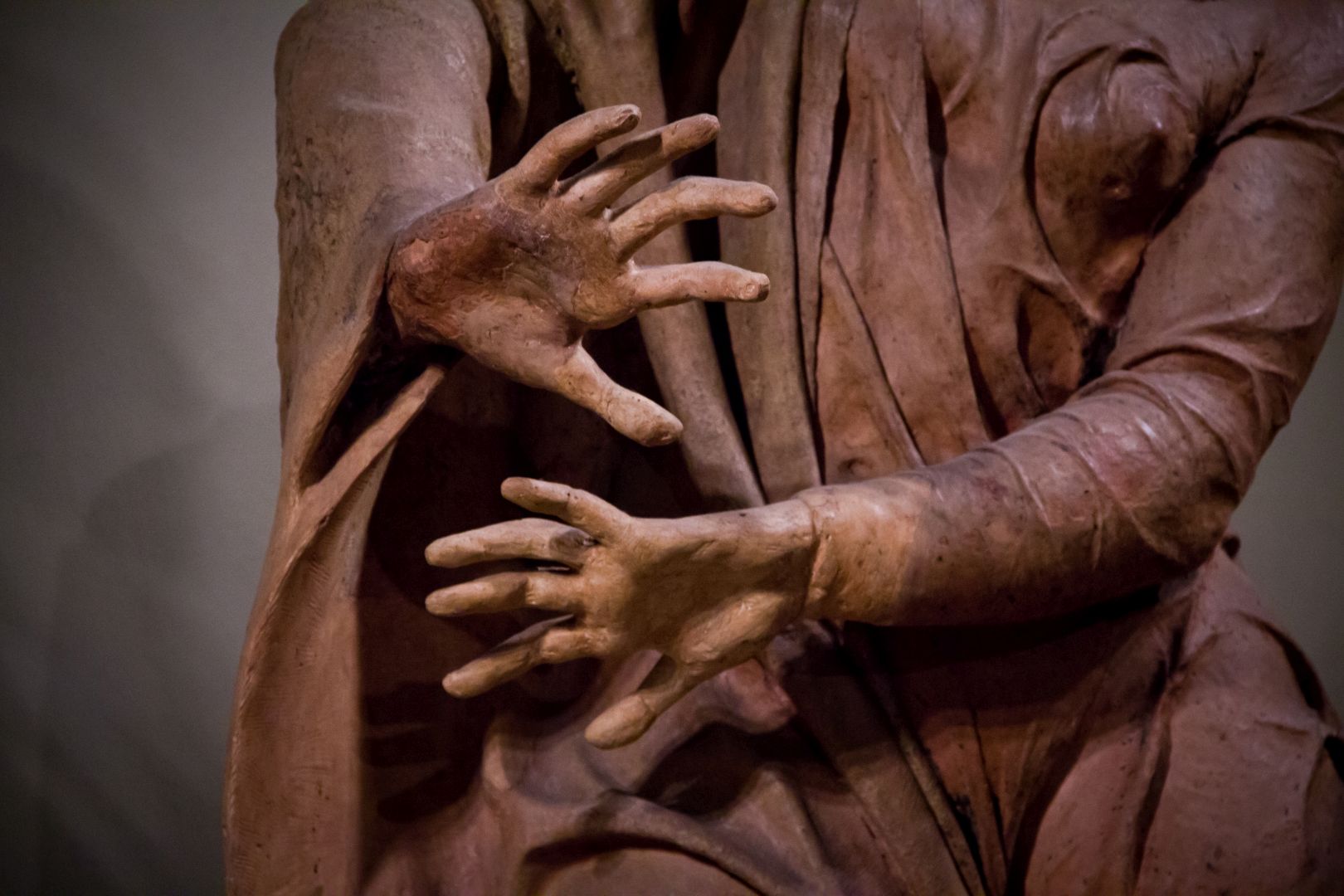
Compianto sul Cristo morto – Particolare 3

Lamentation over the Dead Christ by Niccolò dell’Arca is without a doubt one of the most extraordinary and dramatic sculptural works of the Italian Renaissance. Crafted in terracotta with traces of polychromy, the sculptural group depicts the moment of Christ’s passion and death, where the sorrow and suffering of the protagonists emerge with an expressive power unmatched by other works of the same period.
The piece is housed in the Church of Santa Maria della Vita in Bologna, a site of deep religious significance, where the group has been embraced as both a testament of faith and a visceral reflection on death and Christ’s sacrifice. While terracotta is a less durable material than marble, it lends a softness to the modeling of the figures, and at the same time enhances the emotional pathos.
In conclusion, Lamentation over the Dead Christ by Niccolò dell’Arca stands as an exception within the sculptural panorama of the time—an artwork that not only defies the artistic conventions of the Renaissance, but remains a powerful example of expressionism, capable of conveying pain in a direct and unsettling way. Its originality and intensity remain unparalleled in 15th-century Italian sculpture.
The work consists of seven life-sized figures, though their original arrangement is not definitively known; the current composition is traditionally attributed to the setting of the Church of Santa Maria della Vita in Bologna. The figures, although not precisely dated (estimated between 1463 and 1490), exhibit extraordinary drama, particularly in their facial expressions and bodily gestures. The emotions of the characters seem to be frozen in an instant of pure anguish, with faces twisted in grief and bodies bent and contorted in dramatic ways—powerfully expressing the psychological and physical turmoil of those present at the moment of the martyrdom.

