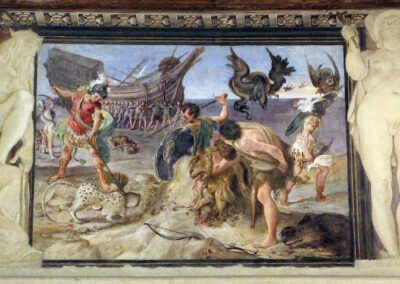
Via de’ Carracci
Via de’ Carracci is located in the Bolognina district, behind the Bologna high-speed train station and the Marconi Express exit, the monorail that connects the station to the airport. The street stretches from Via Giacomo Matteotti to Via Francesco Zanardi, and its current name was given in 1909 in honor of the famous Bolognese family of painters Annibale, Agostino, and Ludovico Carracci, whose works are displayed and visible in the city of Bologna.
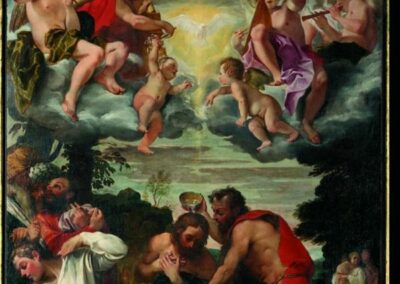
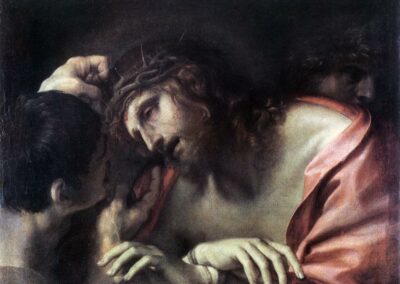
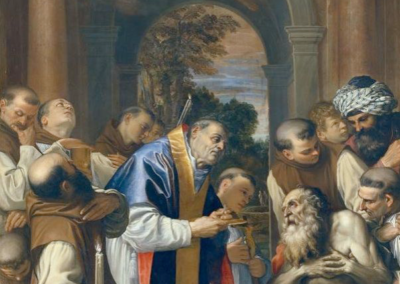
The works of Annibale Carracci:
The works of Agostino Carracci:
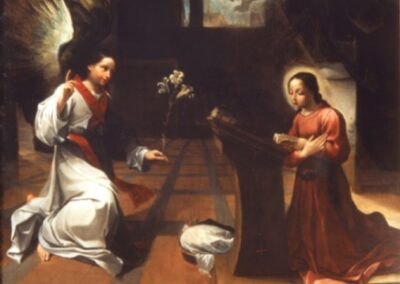
The works of Ludovico Carracci:
The works of Annibale and Ludovico Carracci:
The works of Annibale, Agostino and Ludovico Carracci:
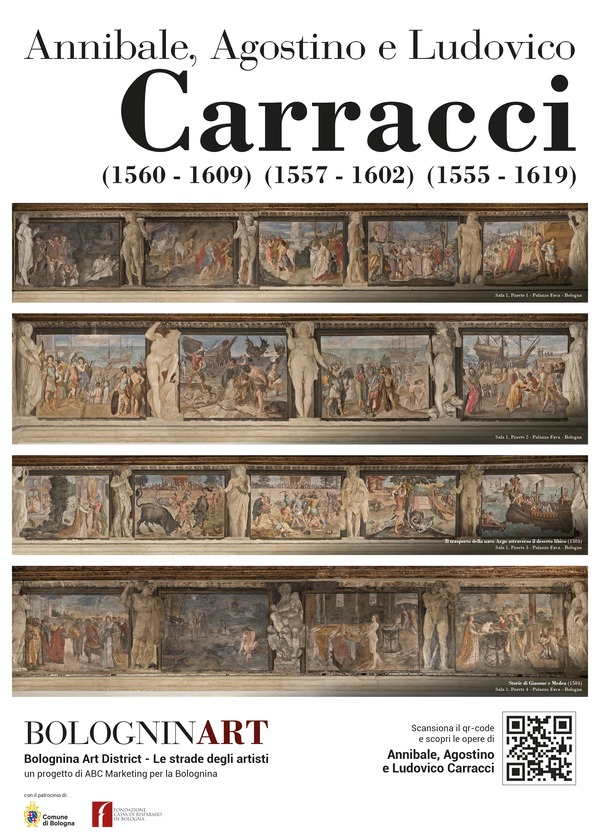
Artists’ Panel
Via De’ Carracci, Bologna
Annibale Carracci (1560-1609)
Annibale Carracci was born in Bologna in 1560 and was a founding member, along with his cousin Ludovico and elder brother Agostino, of the Accademia degli Incamminati. This academy became a major force in revitalizing Bolognese art, countering the crisis of Mannerism with a return to nature, classical tradition, and a realistic vision of the world.
Annibale developed a style that masterfully balanced the refinement of High Renaissance with the freshness of realism, influenced by masters such as Raphael, Correggio, and Michelangelo, as well as by Venetian innovations—especially those of Titian and Paolo Veronese. His art is distinguished by an extraordinary ability to convey human emotions with refined elegance, combining Correggio’s luminous atmospheres with the expressive colorism of the Venetian school.
Among his most notable works from the 1580s is La bottega del macellaio, a keen exploration of reality influenced by Northern European genre painting. His Assunzione della Vergine, held in the Pinacoteca Nazionale di Bologna, exemplifies his 1590s approach, where religious subjects are portrayed with palpable realism. In Rome, he executed the celebrated fresco cycle on the ceiling of the Galleria Farnese (1597–1600), commissioned by Cardinal Odoardo Farnese, where he demonstrated his expertise in fresco painting with dynamic and dramatic mythological scenes.
In the final years of his career, Annibale also turned to landscape painting, inspired by Nicolò dell’Abate and the Venetian tradition, initiating a new and revolutionary vision of landscape art.
Among his last important works are the frescoes of the Cappella Herrera in San Giacomo degli Spagnoli in Rome, completed between 1604 and 1607 primarily by Francesco Albani, with assistance from Giovanni Lanfranco and Sisto Badalocchio.
Annibale died in Rome in 1609, leaving an indelible mark on Baroque painting and European artistic tradition.
Agostino Carracci (1557-1602)
Agostino Carracci was born in Bologna in 1557 and stood out for his talent in engraving, a medium that allowed his analytical mind to engage with the works of Renaissance masters like Correggio and Veronese. Through engraving, he could explore line relationships, light effects, and chiaroscuro.
In painting, his style featured vibrant colors influenced by the Venetian and Emilian traditions, particularly inspired by Titian and Correggio. Among his most important works are the paintings for the Church of San Giovanni in Monte in Bologna, which are exemplary of his elegant and precise style. Though he was also a talented fresco painter, his career was largely devoted to printmaking, which helped disseminate his works and the stylistic innovations of the Bolognese school.
He died in Bologna in 1602. Despite a less prolific painting output compared to Annibale and Ludovico—his co-founders of the Accademia degli Incamminati—Agostino Carracci is remembered for his fundamental contribution to art reform and the creation of the Bolognese school, which significantly influenced the development of Baroque painting.
Ludovico Carracci (1555-1619)
Ludovico Carracci, born in Bologna in 1555, played a fundamental role in renewing late Mannerist painting, promoting a return to naturalistic representation and a form of artistic research focused on conveying popular religious sentiment. In 1582, together with his cousins Agostino and Annibale Carracci, he founded the Accademia del Naturale or Accademia del Disegno, later known as the Accademia degli Incamminati, which quickly became one of the most influential artistic centers in Bologna. It promoted drawing from life as a means of seeking a reality freed from the artificiality of Mannerism.
Having begun his artistic training under Prospero Fontana, Ludovico truly came into his own during his studies alongside Agostino and Annibale. His style broke away from Mannerist conventions, favoring simplicity and naturalism and marked by a strong moral component in line with the principles of the Counter-Reformation.
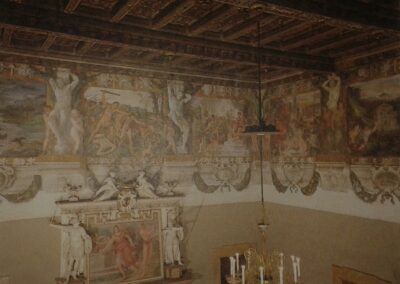
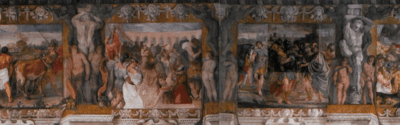
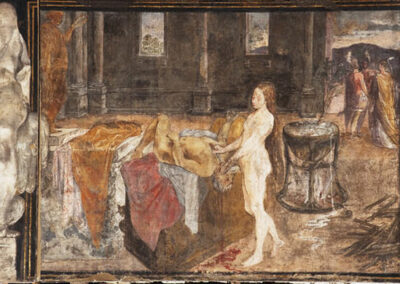
In the 1580s, he collaborated with his cousins on the decoration of Palazzo Fava and painted the Madonna dei Bargellini, known for its vivid colors and the tender expressions of Mary and the Christ Child. This expressive emotion reached its peak in 1591 with the Madonna col Bambino e i santi Francesco e Giuseppe e i committenti (also known as La Carraccina), located in Cento, where Ludovico fully expressed the humanization of the sacred subject, focusing on gestures, glances, and emotional representation.
Between 1604 and 1605, he created an extraordinary mural cycle in the cloister of San Michele in Bosco in Bologna. However, the use of oil on wall led to rapid deterioration. He later worked in Piacenza, where he executed now-lost frescoes in the cathedral choir and the archbishop’s palace. In 1614, he completed the Crocifissione e i Santi Padri nel Limbo for Santa Francesca Romana in Ferrara.
Ludovico Carracci died in 1619 in Bologna, leaving behind a lasting legacy in the artistic history of the city. His influence shaped the work of artists such as Guercino and, on a national scale, Caravaggio, thanks to his original style and vivid depiction of human emotion.