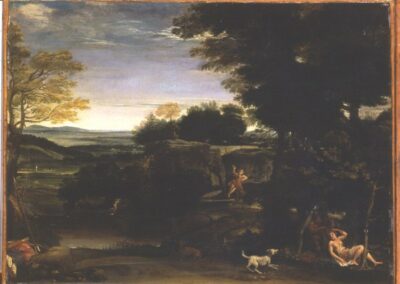
Via Domenico Zampieri
Via Domenico Zampieri, located in the heart of the Bolognina district in Bologna, ends at the intersection with Via Giacomo Matteotti and is named after Domenico Zampieri, a Bolognese painter known as “Il Domenichino.”
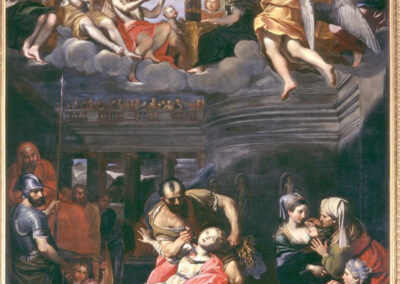
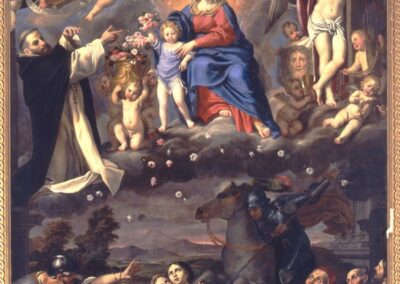
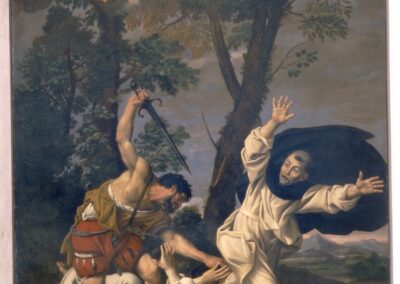
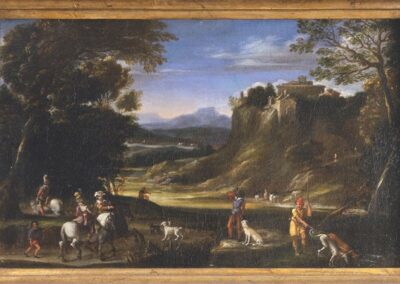
The works of Domenico Zampieri:
Domenico Zampieri detto il Domenichino (1581-1641)
Domenichino, born Domenico Zampieri in Bologna on October 21, 1581, and died in Naples on April 6, 1641, was an Italian painter and a master of 17th-century classicism, deeply inspired by ancient art and the works of Raphael.
He is considered one of the leading Emilian artists of his time, alongside the Carracci, Guido Reni, Francesco Albani, Giovanni Lanfranco, and Guercino. Active primarily in Rome, he worked in Naples during the final phase of his career. Coming from a modest family—his father was a shoemaker—he initially pursued humanistic studies but soon displayed a strong inclination for art. He entered the Bolognese studio of Denijs Calvaert, where he trained alongside his brother, Guido Reni, and Francesco Albani, with whom he developed a close friendship.
In 1602, Domenichino moved to Rome and lived at the convent of Santa Prassede. He became a pupil of Annibale Carracci and collaborated with him on several major decorative projects of the time, including the Aldobrandini lunettes, the Farnese Gallery, and the Herrera Chapel. These collaborations culminated in the Farnese frescoes, which marked his artistic breakthrough.
Supported by Monsignor Giovanni Battista Agucchi, Domenichino gained wide recognition in the Roman art scene, receiving important commissions—especially for large fresco cycles—which brought him great fame.
In 1608, he painted the Flagellazione di Sant’Andrea in the Oratory of San Gregorio al Celio, setting the small figures against a classical Roman city backdrop. That same year, he collaborated with Francesco Albani on the decoration of Palazzo Mattei di Giove. He later frescoed the Storie di San Nilo in the Chapel of the Founders of the Abbey of San Nilo in Grottaferrata (1608–1610). This commission, for which Annibale Carracci provided two preparatory drawings, marked a decisive turning point in his career.
After Annibale’s death in 1609, Domenichino, Guido Reni, and Francesco Albani became central figures in the Roman art scene. That same year, the Marquis Vincenzo Giustiniani commissioned Domenichino to decorate his villa in Bassano Romano, where the Storie di Diana reveal the painter’s refined use of color and growing interest in landscape.
In the early 1610s, Domenichino received a prestigious commission from the heirs of Pierre Polet to decorate the family chapel in San Luigi dei Francesi, Rome. In the Storie di Santa Cecilia, he reworked models from ancient sculpture and Raphael’s paintings, achieving full stylistic maturity.
In 1630, he moved to Naples, where he concluded his career decorating the Chapel of the Treasure of San Gennaro in the Cathedral.
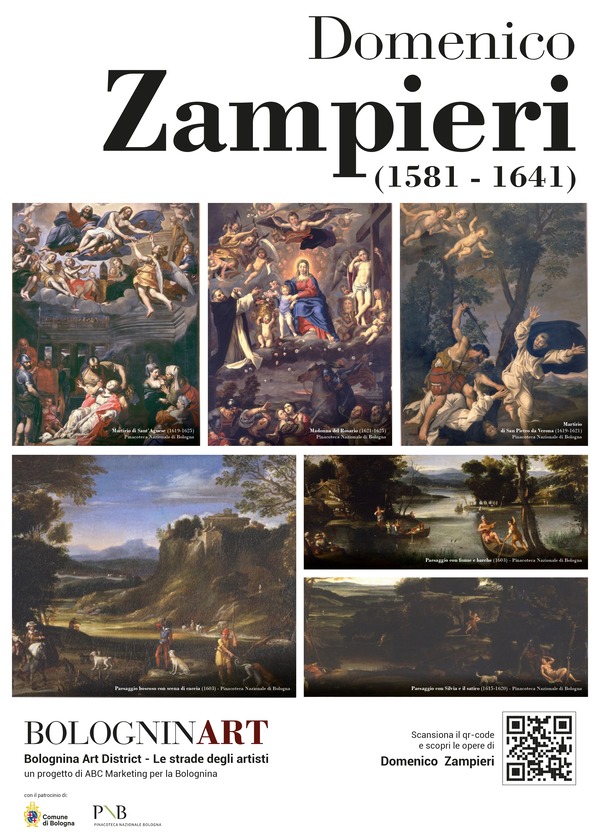
Artist’s Panel
Via Alessandro Tiarini, Bologna