Via Francesco Albani
Via Francesco Albani is a street located in the Bolognina area in Bologna and is dedicated to the Bolognese painter. Its current name probably dates back to 1903.
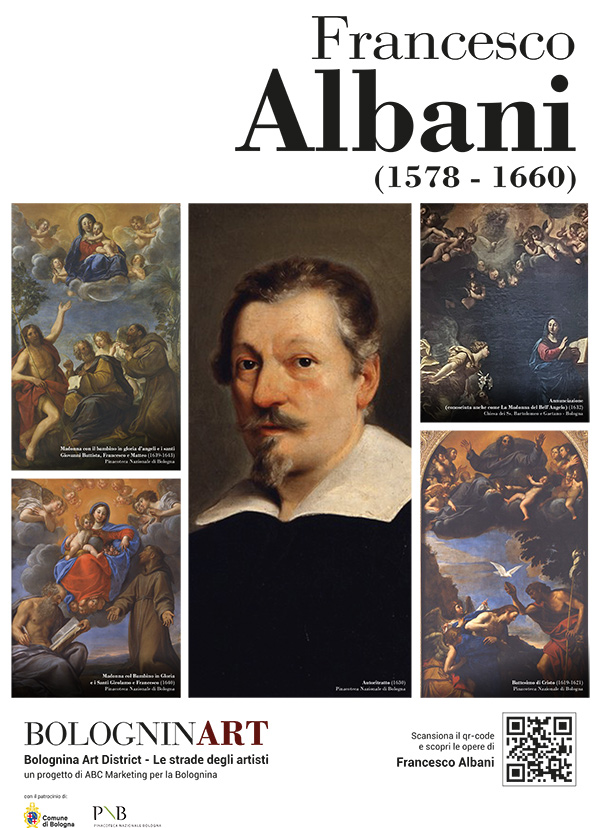
The works of Francesco Albani:
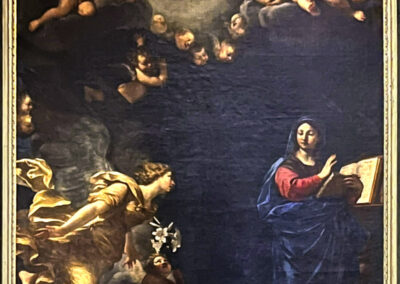
- Annunciazione (La Madonna del Bell’Angelo) (1632)
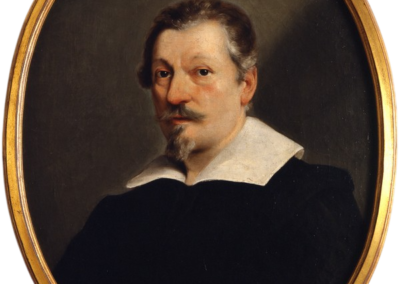
- Autoritratto (1635 ca.)
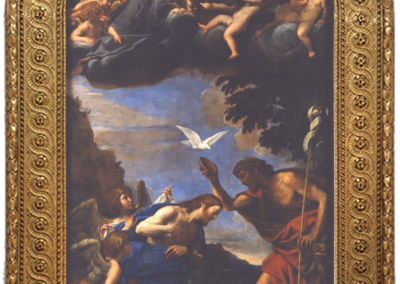
- Battesimo di Cristo (1619-1621)
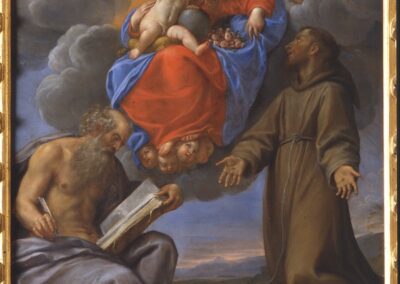
- Madonna col Bambino in Gloria e i Santi Girolamo e Francesco (1640 ca.)
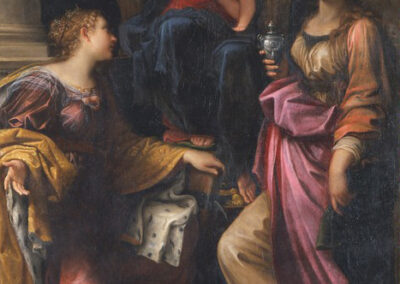
- Madonna col Bambino in trono fra le Sante Caterina d’Alessandria e Maria Maddalena (1599)
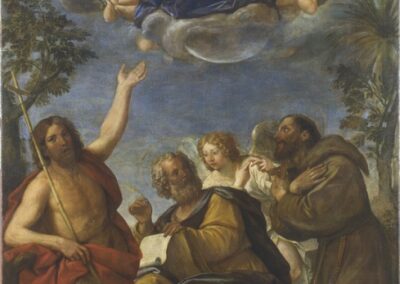
- Madonna con il Bambino in gloria d’angeli e i santi Giovanni Battista, Francesco e Matteo (1639-1643)
Francesco Albani (1578-1660)
Francesco Albani, one of the leading figures of 17th-century Emilian classicist painting, likely began his apprenticeship in the workshop of the Flemish artist Denijs Calvaert, long active in Bologna and teacher to painters such as Guido Reni and Domenichino. After studying drawing, perspective, anatomy, and painting techniques, the young artist painted small copper works that were sold under his master’s name. He came into contact with the Carracci around the mid-1590s, and between 1596 and 1598 began receiving his first public commissions, including the decoration of Palazzo Fava and works for the Oratory of San Colombano, thanks in part to the intercession of Ludovico Carracci.
In 1599, at the age of 21, Albani became a member of the Bologna Painters’ Guild. This period saw the creation of his first fully autonomous works, including Madonna col Bambino fra le sante Caterina d’Alessandria e Maria Maddalena and Nascita della Vergine, which reveal the influence of Annibale Carracci’s idealized classicism and Agostino Carracci’s approach to composition and figuration.
In 1601, Albani arrived in Rome for the first time, but his early years in the city were marked by difficulty securing patrons. Although direct evidence is scarce, he collaborated with Annibale Carracci on the renowned frescoes of the Farnese Gallery and simultaneously produced small easel paintings for Roman patrons and collectors, including Cardinal Pietro Aldobrandini, nephew of Pope Clement VIII.
In 1604, as Annibale’s health declined, Albani assumed leadership of major projects such as the decoration of the Herrera Chapel in San Giacomo degli Spagnoli (1602–1607), his first significant work in Rome, and the lunettes in Palazzo Aldobrandini (1604–1610), now in the Doria Pamphilj Gallery, completed with the collaboration of the Parma-born painter Sisto Badalocchio. These important commissions were followed by others, including the decoration of Palazzo Maffei and Palazzo Verospi on the Corso. After an initial return to Bologna in 1617 and a brief stay at the Mantuan court from 1621 to 1622, the artist returned to Rome in 1623, working for prominent families such as the Borghese, Colonna, Corsini, and Giustiniani.
He later settled permanently in his native city, devoting the rest of his career to producing altarpieces and small-format works for private patrons, often depicting mythological or sacred scenes set in idyllic landscapes.
Artist’s Panel
Via Albani, Bologna